20 Years as a GHD Flat Iron Affiliate Why GHD Curls Last Longer and Stay Beautiful

Twenty years is a long time to stand behind a hair tool. Trends have come and gone, from poker-straight hair to loose beach waves, soft bends, glossy blowout curls, and everything in between. Through all of it, one styling tool has stayed in my kit, my bathroom, my recommendations, and my affiliate links: the GHD flat iron.
I became a GHD flat iron and hair straightening affiliate because I genuinely liked the product. I stayed an affiliate for two decades because the results kept speaking for themselves.
The biggest surprise for many people is this: a good flat iron does far more than straighten hair. Used well, a GHD styler can create curls that look polished, feel soft, and hold beautifully. Not stiff. Not crunchy. Just smooth, shaped, and pretty.
I do earn from qualifying purchases when someone buys through my affiliate recommendations, so I always want to be clear about that. But after 20 years, I also know this: trust matters more than commission. I would rather recommend one tool I believe in than chase every new hot tool that appears for a season and disappears by the next.
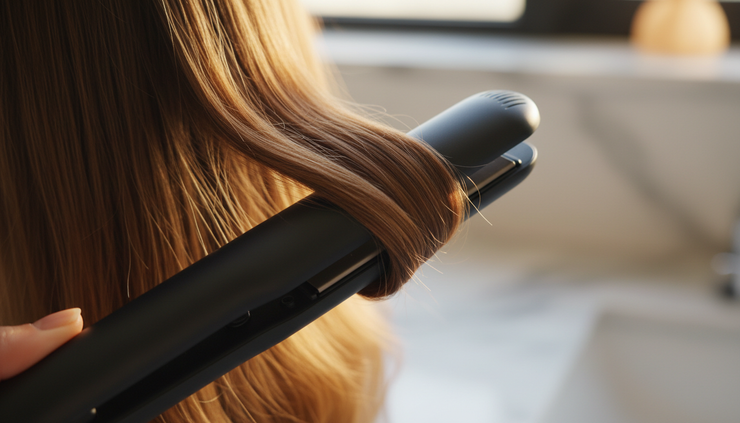
Why I have stayed with GHD for 20 years
When I first started recommending GHD, flat irons were often thought of as straightening tools only. Many people used them to press hair flat, remove frizz, and get that shiny, sleek finish that became so popular.
Then people began discovering something else. The shape of a GHD styler made it possible to curl, wave, bend, flick, smooth, and polish with one tool. That mattered because most people did not want a drawer full of gadgets. They wanted one reliable tool that could do several jobs well.
That is still one of the main reasons I rate GHD so highly.
A good GHD flat iron gives you:
Smooth plates that glide without snagging
A rounded outer body that helps shape curls
Consistent styling heat
A polished finish without needing to repeatedly clamp the same section
A lighter, easier feel than many older styling tools
The repeat pass is where a lot of hair styling goes wrong. If a tool does not work well the first time, people keep going over the same piece of hair. That can leave the hair feeling dry, rough, or tired. A reliable styler helps you do the job with fewer passes, which is kinder to the hair and gives a cleaner finish.
Over the years, I have seen people try cheaper irons that seem fine at first. Then the plates start pulling. The heat feels uneven. The curls drop too fast. The shine is not the same. Sometimes the hair looks finished for an hour, then frizzes or falls flat.
That is where GHD has kept its value for me. It has not been about hype. It has been about consistent results.
Why GHD curls can last longer
A curl lasts when three things work together: heat, shape, and cooling. The tool matters, but so does the way the curl is formed and left to set.
GHD stylers are known for using controlled styling heat rather than extreme heat for the sake of it. That matters because very high heat can sometimes shock the hair into shape, but it can also leave the curl looking dry or limp later. A smoother, more controlled pass can create a curl that looks shinier and feels more natural.
The rounded edges of the styler also help. When you twist the iron away from the face and glide down the section, the hair wraps around the curved outside of the tool. That creates a softer curl pattern than a hard bend. The curl looks less like a crease and more like a shaped wave.
Here is what I have noticed again and again: GHD curls often last longer because they are formed smoothly from root to end, then allowed to cool in the shape you created.
That cooling stage is easy to skip, but it makes a huge difference. Hair is most flexible when it is warm. As it cools, it settles into its new shape. If you curl a section, then immediately brush it out or pull at it, the curl has no chance to set.
For longer-lasting curls, I like this method:
Start with completely dry hair.
Work in clean, manageable sections.
Clamp the styler gently near the root.
Turn the iron half a turn or a full turn, depending on the curl you want.
Glide slowly and steadily to the end.
Catch the curl in your palm for a few seconds.
Let it cool before brushing or styling.
That small pause after curling can change everything. The curl keeps its memory better, and the finished style looks soft instead of forced.
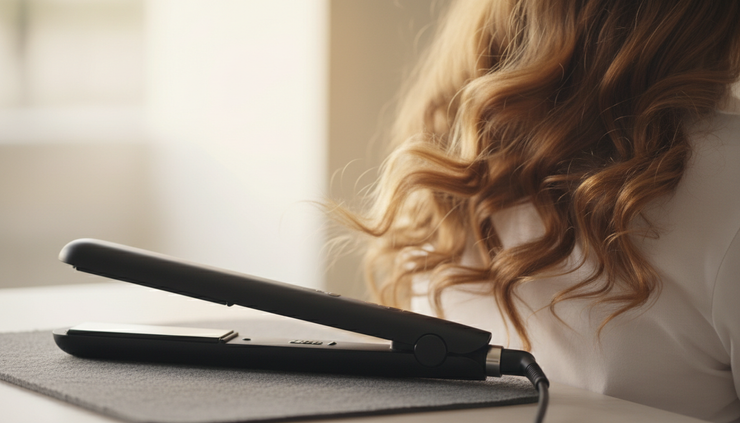
The small details that make flat iron curls stay beautiful
The tool is important, but the preparation around it matters too. After years of talking about GHD flat irons, I have found that the best results usually come from simple habits repeated well.
Start with the right base
Curls hold better when the hair has a little grip. Freshly washed hair can sometimes be too soft, especially if it has a heavy conditioner or too much smoothing product in it.
If the hair is very silky, a light styling spray or heat protectant with hold can help. The goal is not to make the hair sticky. The goal is to give the curl something to hold onto.
Hair should also be fully dry. A flat iron should not be used on damp hair unless the tool is specifically designed for that. With a regular styler, damp hair can steam, swell, and lose shape quickly. Dry hair curls cleaner and holds better.
Take smaller sections
Large sections may feel faster, but they often lead to weak curls. The outside of the section gets heat, while the inside does not receive enough. The result is a curl that looks loose from the start and drops quickly.
Smaller sections give better control. They allow the heat to pass through evenly, so the curl forms from the outer layers right through the middle.
For everyday waves, sections do not need to be tiny. They just need to be manageable. If the hair slips out of the plates or feels bulky, the section is too large.
Keep the movement smooth
One common mistake is stopping and starting as the styler moves down the hair. That creates dents. It can also make the curl uneven.
The best flat iron curls come from a steady glide. Clamp lightly, turn the wrist, then move in one slow, smooth motion. If the curl is too tight, glide a little faster next time. If it is too loose, slow down slightly or use a smaller section.
The wrist turn matters too. For face-framing sections, I usually prefer curling away from the face. It opens up the style and gives a softer finish. Around the back, alternating directions can make curls look fuller and more natural.
Do not brush too soon
This is the step people rush the most. They curl the whole head, see tight spirals, panic a little, and brush everything out while the hair is still warm.
Wait.
Let the curls cool first. Then use fingers, a wide-tooth comb, or a soft brush to loosen them. Once cooled, the curls can be shaped without falling apart.
For a softer finish, tilt the head back and gently separate the curls with your fingers. For fuller hair, lightly shake at the root. For a polished wave, brush through once, then define any pieces that need extra shape.
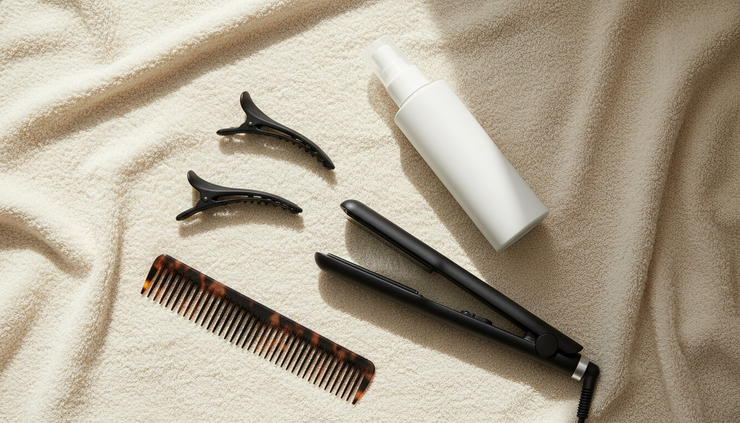
Straightening, waving, and curling with one trusted tool
One reason I have enjoyed being a GHD affiliate for so long is that the tool suits many styling moods. Some days call for sleek, straight hair. Some days need soft bends around the face. Other days are all about full curls with shine and movement.
With a traditional curling iron, you get a specific curl shape based on the barrel. With a flat iron, the shape changes based on how you hold it, how much you turn it, how fast you glide, and how large each section is.
That makes it incredibly flexible.
For sleek straight hair, pass the styler slowly from root to tip with light tension. Follow the natural fall of the hair, and avoid clamping too hard.
For soft waves, take medium sections, turn the iron half a turn, and glide through. Leave the ends slightly straighter for a relaxed finish.
For longer-lasting curls, use smaller sections, turn the iron more fully, and let each curl cool in your hand.
For flicked ends, straighten the section first, then turn the wrist in or out only at the final few centimetres.
This is why I still enjoy talking about GHD after all these years. A good styler grows with your style. It does not lock you into one look.
There is also a confidence that comes from knowing your tool. After using a styler for a long time, you learn its rhythm. You know how slowly to move, how much pressure to use, and how each part of your hair responds. That familiarity makes styling easier and quicker.
A new tool can be exciting. A trusted tool is better on the mornings when you have 15 minutes and need your hair to behave.
What I tell people before they buy a GHD styler
After 20 years as an affiliate, I never want anyone to buy a hair tool just because it is popular. A good tool should fit the way you style your hair.
Before choosing a GHD flat iron, think about:
Your hair length
Your hair density
How often you style with heat
Whether you mostly straighten, curl, or do both
How comfortable you are using a flat iron for curls
Whether you prefer polished styles or looser, undone waves
For shorter hair, a slimmer styler can make it easier to control small sections and reach close to the root. For longer or thicker hair, a larger plate may feel quicker for straightening, though many people still prefer a standard size for curling because it gives more control.
If curls are the main goal, pay attention to the shape of the styler. Rounded edges make curling easier. A flat, boxy iron can straighten well but may leave bends or creases when used for curls.
I also suggest practising the movement when the tool is switched off. It sounds simple, but it helps. Clamp lightly, turn the wrist, and glide. Once the motion feels natural, styling becomes much easier.
The best curls rarely come from squeezing the plates tightly. They come from a clean section, gentle tension, a smooth turn, and patience while the hair cools.
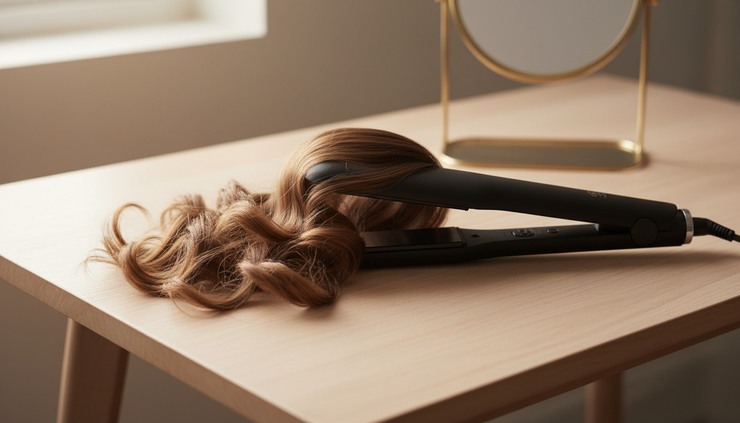
My honest takeaway after two decades with GHD
Being a GHD flat iron affiliate for 20 years has taught me that people do not come back for marketing promises. They come back when a product helps them get results they can repeat.
That is why I still talk about GHD with real enthusiasm. The stylers are versatile, easy to use once you learn the motion, and especially good for creating polished curls that can last when the hair is prepped, curled, and cooled properly.
Will every curl last all day on every head of hair? No. Hair texture, weather, products, length, and colour treatments all play a part. Bermuda humidity, for example, can challenge even the best styling routine. But with the right prep and technique, GHD curls can hold beautifully and still feel soft to the touch.
For me, that is the real beauty of a dependable flat iron. It does not just make hair look styled when you leave the house. It helps the style keep its shape, shine, and movement as the day goes on.
After 20 years, my advice is simple: choose a quality tool, protect your hair, work in clean sections, let the curls cool, and do not rush the finish. A beautiful curl is not only made by heat. It is made by control, patience, and a styler you can trust.
Comments